
Saudi Arabia is home to some of the world’s largest oil, gas, petrochemical and construction projects. Workers on these sites face flash fires, welding sparks, chemicals, dust and summer heat above 45°C, often on 10 to 12-hour shifts. The right coverall depends on the hazard. A cotton work coverall is fine for a warehouse, but in a refinery or gas plant you need certified flame-resistant clothing. For chemical spraying, you need a disposable coverall with the right type rating.
This guide explains the main types of industrial coveralls, the standards to check on the label, which coverall suits each industry, and how to buy certified coveralls in bulk in Saudi Arabia.
Quick guide: which coverall do you need?
| Main hazard | Coverall type | Standard to look for |
|---|---|---|
| Flash fire (oil, gas, petrochemical) | FR coverall | ISO 11612 or NFPA 2112 |
| Welding sparks and spatter | Welding FR coverall | EN ISO 11611 |
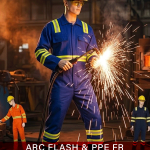
| Electric arc flash | Arc-rated FR coverall | IEC 61482-2 or NFPA 70E (ATPV/ELIM rating) |
| Static in explosive areas | Antistatic FR coverall | EN 1149-5 |
| Dust, paint and light splashes | Disposable coverall | Type 5 and 6 (EN ISO 13982-1, EN 13034) |
| Liquid chemical spray | Chemical protective coverall | Type 3 or 4 (EN 14605) |
| Traffic and moving vehicles | Hi-vis coverall | EN ISO 20471 |
| General dirt, oil and wear | Cotton or poly-cotton workwear coverall | EN ISO 13688 |
Shop safety coveralls · Shop disposable coveralls · Request a bulk quote
Why Safety Coveralls Matter on Saudi Industrial Sites
A coverall is often the last layer between a worker and a serious burn or chemical injury. The right one protects against:
- Flash fires and heat in oil, gas and petrochemical plants
- Welding sparks and molten metal spatter
- Chemical splashes and spray
- Oil, grease, dust and dirt
- Abrasion during heavy manual work
- Contamination in labs, food plants and cleanrooms
A standard coverall does not protect against electric shock. For electrical work, you need arc-rated clothing plus insulated gloves and tools.
Well-fitted, breathable coveralls also reduce heat stress, which matters on outdoor Saudi sites in summer.
Types of Industrial Safety Coveralls
1. Flame-resistant (FR) coveralls
FR coveralls resist ignition and stop burning once the flame source is removed. This greatly reduces burn injuries in a flash fire. They are standard PPE in refineries, gas plants and petrochemical facilities.
There are two kinds of FR fabric:
- Inherent FR (such as aramid / Nomex®): the fibre itself is flame resistant, so protection does not wash out.
- Treated FR cotton: cotton treated to resist flame. More affordable and comfortable, but follow the care label to keep protection over the garment’s life.
2. Arc-rated (AR) coveralls
Arc-rated coveralls are FR coveralls tested against electric arc flash. They carry an arc rating (ATPV or ELIM in cal/cm²). Choose a rating equal to or above the arc risk assessed for the job. Electricians and substation workers need these.
3. Welding coveralls
Welding coveralls are FR garments tested for sparks and small molten metal splashes (EN ISO 11611). They usually use heavier FR cotton and have covered pockets so sparks don’t collect.
4. Disposable coveralls
Lightweight, single-use coveralls for dust, paint, fibres and light chemical splashes. They are used in painting, laboratories, pharmaceuticals, food processing, cleanrooms and asbestos or insulation removal. Check the Type rating: Type 5/6 for dust and light splashes, Type 4 or 3 for chemical spray and jets.
5. Chemical protective coveralls
Heavier, reusable or limited-use suits for handling acids, alkalis and hazardous liquids. Check which chemicals the fabric has been tested against before buying. Our guide on how to choose chemical-resistant clothing explains this in detail. See our chemical resistant clothing range.
6. Heavy-duty and workwear coveralls
Cotton or poly-cotton coveralls for general dirt, oil and wear. They suit construction, mining, mechanical workshops, warehouses and maintenance teams where there is no fire or chemical risk. Look for reinforced knees, double stitching and reflective tape.
Important: never wear a polyester or nylon coverall where there is a fire risk. Synthetic fabric can melt onto the skin and make burns worse.
Safety Standards for Coveralls
“Certified” means nothing without a standard number. Check the label inside the collar for these:
| Standard | What it covers | Typical users |
|---|---|---|
| ISO 11612 | Protection against heat and flame (flash fire, radiant heat) | Oil, gas, petrochemical |
| NFPA 2112 | US standard for flash fire protective garments | Oil and gas, Aramco-type sites |
| EN ISO 11611 | Protection during welding (sparks, spatter) | Welders, fabricators |
| IEC 61482-2 / NFPA 70E | Protection against electric arc flash (arc rating in cal/cm²) | Electricians, substations |
| EN 1149-5 | Antistatic properties to prevent sparks from static | Explosive (ATEX / classified) areas |
| EN ISO 20471 | High-visibility clothing | Roads, ports, vehicle yards |
| EN 14605 (Type 3/4) | Chemical protection against liquid jets or spray | Chemical handling, tank cleaning |
| EN ISO 13982-1 (Type 5) / EN 13034 (Type 6) | Protection against dust particles / light splashes | Painting, insulation, labs |
| EN ISO 13688 | General requirements (sizing, labelling, comfort) | All protective clothing |
Many oil and gas coveralls combine several standards, for example ISO 11612 + EN 1149-5 + IEC 61482-2.
Which Coveralls Suit Each Industry in Saudi Arabia?
Oil and gas (Eastern Province, Dhahran, Ras Tanura)
Flame-resistant clothing is standard on hydrocarbon sites. Saudi Aramco, for example, requires FRC for personnel exposed to fire hazards in its facilities. Choose FR coveralls certified to ISO 11612 or NFPA 2112, with EN 1149-5 antistatic properties for classified areas and FR reflective tape for visibility. Contractors should always confirm the client’s own FRC specification before buying. For work at height, see our guide to choosing a safety harness for oil and gas workers, and pair coveralls with a gas detector in H2S areas.
Petrochemical plants (Jubail, Yanbu)
Combine flash fire, chemical and static hazards. Choose multi-standard FR coveralls (ISO 11612 + EN 1149-5), and add chemical splash protection for tasks such as sampling or line breaking.
Electrical and utilities
Choose arc-rated coveralls (IEC 61482-2 / NFPA 70E) with an arc rating matched to the job’s risk assessment. Wear them as the outer layer, with only natural-fibre clothing underneath.
Welding and fabrication
Choose welding coveralls to EN ISO 11611, in heavier FR cotton, with flap-covered pockets and no turn-up cuffs where sparks can collect. For extra protection, add a leather welding apron and an industrial face hood.
Construction and mining
Where there is no fire risk, durable cotton or poly-cotton coveralls with reinforced knees and reflective tape are enough. For roadwork, choose hi-vis coveralls (EN ISO 20471) or add a high-visibility safety jacket.
Pharmaceuticals, labs, food processing and painting
Use disposable coveralls with the right Type rating (Type 5/6 for most dust and paint work). Choose low-linting fabric for cleanrooms, and add a disposable respirator for dust and paint mist.
Logistics, warehouses and maintenance
Comfortable cotton or poly-cotton workwear coveralls with plenty of pockets and reflective tape are usually sufficient.
Key Features to Check Before Buying
| Feature | What to look for | Why it matters |
|---|---|---|
| Fabric | 100% cotton, FR cotton, aramid or poly-cotton, matched to the hazard | Synthetics can melt in a fire |
| Fabric weight | Lighter (around 200–260 GSM) for heat; heavier (300+ GSM) for welding and heavy wear | Balances comfort and durability |
| Breathability | Vented back, underarm vents, light colours for outdoor work | Reduces heat stress in Saudi summers |
| Fit | Room to bend, kneel and reach; correct chest and leg length | Loose enough to move, not so loose it snags |
| Stitching | Double or triple-stitched seams; FR thread on FR garments | Stops seams splitting under strain |
| Zips and fasteners | Brass or FR-rated zips with a covering flap | Metal or plastic can heat or melt |
| Reflective tape | FR reflective tape on FR coveralls | Visibility at night and near vehicles |
| Pockets | Flap-covered chest, leg and tool pockets | Holds tools; keeps sparks out |
| Knees | Reinforced knees or knee pad pockets | Longer life on kneeling work |
Heat tip: for outdoor summer work, choose the lightest coverall that still meets the required standard, and pair it with a cooling vest worn underneath where your site allows.
Where to Buy Industrial Coveralls in Saudi Arabia
Choose a supplier who can show certificates, not just promise quality. Before ordering, ask:
- Which standards is this coverall certified to? Ask for the test certificate, not just a label.
- Is it registered for import? PPE and protective clothing imported into Saudi Arabia must be certified through SASO’s SABER platform. Make sure your supplier can provide the conformity certificates.
- Can you meet our client’s specification? Oil and gas contractors often have to follow the operator’s FRC spec.
- What sizes, colours and fabric weights are available? Large crews need a full size range.
- Can you add company logos? On FR garments, logos and badges must use FR materials.
- How fast can you deliver to Riyadh, Jeddah, Dammam, Jubail or Yanbu?
Why buy from Protective Wears?
Protective Wears supplies industrial safety coveralls and complete PPE to contractors and industrial companies across Saudi Arabia:
- Wide range: FR, arc-rated, welding, disposable, chemical and cotton workwear coveralls
- Certified products: certificates available on request
- Bulk and project orders: volume pricing for crews and sub-contractors
- Complete PPE in one order: add safety boots, safety helmets, gloves and face protection
- Prices in SAR: switch the site currency to Saudi Riyal
- Fast quotes: our team replies to B2B requests within 24 hours
Shop safety coveralls · Shop Arc Flash & FR · Request a bulk quotation · Chat on WhatsApp
Manufacturer or supplier: which is better?
Buying direct from a manufacturer can lower unit costs on very large orders of a single design. A specialist PPE supplier offers more brands and certifications in one place, smaller minimum orders, faster delivery and help choosing the right standard. For most companies that need several coverall types plus other PPE, a supplier is the more practical choice.
Care and Replacement
Replace any coverall that has holes, worn-thin areas, broken zips, or contamination that won’t wash out.
Follow the care label. FR garments can lose protection if washed wrongly.
No bleach or fabric softener on FR coveralls; both can reduce flame resistance or leave a flammable residue.
Wash off oil and fuel promptly. Flammable contamination can burn even on FR fabric.
Don’t modify FR coveralls with non-FR patches, badges or repairs.
Never reuse disposable coveralls. Dispose of them after each use or if torn.
Conclusion
The right industrial coverall depends on the hazard: FR for oil, gas and petrochemical sites, arc-rated for electrical work, EN ISO 11611 for welding, typed disposables for dust and chemicals, and durable cotton workwear for general tasks. Always check the standard on the label and buy from a supplier who can provide certificates and SABER compliance.
Ready to equip your team? Browse safety coveralls or request a bulk quotation and our team will reply within 24 hours.
Related reading: Where to Buy Safety Coveralls in Qatar
Safety Coveralls FAQs
Where can I purchase industrial coveralls in Saudi Arabia?
Industrial coveralls are available from reputable PPE manufacturers such as Protective Wears, who provide coveralls that are certified and used in the construction industry, manufacturing industry, oil and gas industry, and others.
What is the use of flame-resistant coveralls?
Flame-resistant coveralls help to keep workers safe from flash fires, heat and welding sparks. These types of coveralls are mostly used in oil refineries, petrochemical facilities and the electrical industry.
Are disposable coveralls appropriate for use in industries?
Yes. Disposable coveralls are useful in painting, laboratories, pharmaceutical companies and food processing facilities, among other places.
How can one pick the best safety coveralls?
One should consider factors such as hazards at the workplace, material, certifications, strength, comfort, climatic conditions and industrial requirements before purchasing.
Which industries use safety coveralls in Saudi Arabia?
Safety coveralls are used in industries such as oil and gas, construction, manufacturing, mining, logistics, petrochemical facilities, maintenance and engineering.