
An industrial face hood protects the head, face, ears and neck from hazards of the workplace. These hazards may be heat, flames, sparks, molten metal, electrical arcs, dust and chemical splashes. But not all hoods are created equal in protection. You can’t shield yourself against an electrical arc with a simple disposable hood. Flame resistant hoods may not be ideal for chemical work. A welding hood can go around the neck but it is not a replacement for an approved welding helmet. It’s not necessarily the thickest or the most expensive and best industrial face hood. It’s the hood that corresponds to the exact hazard, exposure level and other protective equipment used in the job.
The employer should examine the workplace for hazards before purchasing personal protective equipment. The hood should be adequate to the hazard stated, properly fitting allow clear vision and work with helmets, respirators and eye protection.
This shopping guide to face hoods discusses the various varieties of hoods, typical materials and significant features. This will also allow you to make a safer choice whether you buy from Protective Wears or any other reliable supplier of safety products.
Why Not All Face Hoods Offer the Same Protection
Industrial face hoods are for a variety of risks. Depending on the fabric, the seams, the form, the thickness and the certification, the level of protection can vary. An arc flash hood, for example, must be arc flash rated. Permeation data for the specific chemical tested is required for a chemical resistant hood. The welding hoods should be resistant to hot particles and sparks. These hood types are not interchangeable.
A hood may also be a partial covering of the body. It might cover the head and neck, but leave the eyes open. It may resist splashes of liquids but not vapours of chemicals. It may limit the exposure to heat but it is NOT respiratory protection. OSHA requires that proper eye or face protection be used if flying particles, molten metal, liquid chemicals, chemical vapours or dangerous light radiation are present. This is why the full PPE system matters. A face hood may need to work with:
- Safety glasses or goggles
- A welding helmet
- An arc-rated face shield
- A hard hat
- Hearing protection
- A respirator
- Flame-resistant clothing
- Chemical-resistant coveralls
The parts must fit together without leaving exposed gaps.
How to Choose the Best Hood for Your Work Environment
Start with the hazard not the product name.
Ask these questions before buying:
- What can harm the worker?
- Is the risk heat, flame, electricity, chemicals or particles?
- How serious is the possible exposure?
- How long will the worker remain exposed?
- Does the hood need to work with a helmet or respirator?
- Which safety standard does the employer require?
- Is the hood reusable or disposable?
- Can it be cleaned safely after use?
For electrical work the incident energy calculation or arc flash risk assessment should guide the required arc rating. For chemical work, check the exact chemical name, concentration, temperature and physical form. For welding, consider the welding method, current, position, ventilation and amount of hot spatter. Never choose a hood only because it is marked “heavy-duty,” “heat-resistant” or “industrial grade.” These phrases do not prove that the product has passed a recognised safety test.
Different Types of Industrial Face Hoods
Flame-Resistant Face Hoods
A heat or flame resistant face hood protects the head and neck in short term heat or flame contact. It is widely utilized by oil & gas operations, foundries, utilities and other locations where flash fires are a concern. Flame resistant fabric is made to resist igniting or self-extinguish when the source of heat is removed. Some fabrics have a flame-resistant finish applied. Some have the fibre itself made to be flame resistant. The hood should be close fitting to minimize exposure of skin. But not so tight as to interfere with breathing or hearing or movement.
Check for:
- A recognised heat-and-flame standard
- Full head and neck coverage
- Flame-resistant stitching
- A secure face opening
- Compatibility with safety helmets
- Clear manufacturer care instructions
ISO 11612 specifies minimum performance criteria for protective clothing against heat and flame. Where a hood is covered by the applicable product requirements, check the complete product’s certification and manufacturer information. Flame resistant hoods are not arc certified. These are separate claims of protection. OSHA defines flame resistant clothing as clothing that is resistant to brief exposure to fire. Arc flash gear is meant to protect you from electrical arc risks.
Welding Face Hoods
Welding face hoods protect the scalp, ears, sides of the face and neck against sparks, hot particles and welding splatter. Common materials are flame resistant cotton, leather and heat resistant aramid mixes. A welding helmet does not replace a cloth welding hood. For arc welding and arc cutting, appropriate helmets or hand shields with proper filter lenses are needed. Welding helmets protect you from dangerous light, heat and impact. Safety glasses or goggles may also be required underneath, depending on the applicable eye-protection requirements.
Look for a welding hood that:
- Covers the neck and ears
- Fits under the welding helmet
- Does not block the helmet controls
- Uses spark-resistant material
- Has strong, heat-resistant seams
- Does not create large gaps around the collar
- Allows the worker to turn their head safely
ISO 11611 covers protective clothing for welding and related processes. Its scope includes hoods designed to protect the head during welding work.
Arc Flash Face Hoods
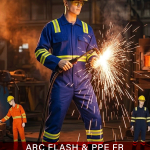
An arc flash face hood is built for electrical tasks that can generate a lot of heat and energy from an electric arc. Lower voltage electrical systems can emit arc energy that is capable of burning exposed skin and igniting inappropriate clothing. An arc flash hood usually is made of a shell of arc-rated cloth with a viewing area. Depending upon the task, workers may wear a full arc-rated hood or an arc-rated balaclava with an arc-rated face shield. The most essential value is the arc rating, commonly given in calories per square centimetre, cal/cm². The hood shall be rated at minimum to the level of protection determined by the employer’s arc flash risk assessment.
Check for:
- A clearly stated arc rating
- Complete head, face and neck protection
- An arc-rated viewing window
- Hard-hat compatibility
- Good peripheral vision
- Anti-fog features
- Secure fastening
- Matching arc-rated clothing and gloves
Chemical-Resistant Face Hoods
Chemical resistant hoods protect the head and neck from certain chemical risks. These may be part of a coverall, splash suit, vapour-tight suit or powered respirator system. The suitable material depends on the particular chemical. A fabric resistant to one acid may not be resistant to a solvent. Temperature, concentration and time of contact might also affect performance.
Chemical protection should be checked against:
- Chemical name
- Concentration
- Liquid, vapour or gas form
- Exposure temperature
- Breakthrough time
- Permeation rate
- Seam construction
- Closure design
- Visor material
- Respirator requirements
No chemical protective material provides unlimited resistance. Protection depends on the specific chemical, material, concentration, temperature and exposure duration. Increased temperatures may also reduce time to breakthrough. Don’t judge the hood by the cloth on the bottom. Seams, visors and closures may be less resistant than the main material. A liquid splash hood does not inherently protect against vapours or gases. OSHA emphasizes that splash-protective suits are designed to protect from liquid splashes, not from continuous liquid contact or gas-tight protection. Where the risk assessment identifies an inhalation hazard, suitable respiratory protection may also be required. Chemical-resistant clothing should be selected according to the specific hazard.
Disposable Face Hoods
Disposable hoods are for dust, dirt, paint spray, light liquid splash and contamination control. They are often used in cleaning, food processing, painting, laboratories and controlled production facilities. These hoods are often lightweight and comfy. They also lessen the amount of laundry you have to do. But protection varies from product to product. A flimsy disposable hood may provide only rudimentary particle control. A chemical-barrier hood can be an effective barrier to some liquids. Do not use either product near flames or electrical arcs unless properly rated.
Check whether the disposable hood offers:
- Particle protection
- Limited splash protection
- Chemical barrier data
- Anti-static properties
- Low-lint material
- Elastic around the face
- Taped or bound seams
- Compatibility with respirators and goggles
Replace a disposable hood after contamination, damage or the stated period of use. Never wash and reuse a single-use hood unless the manufacturer clearly permits it.
Quick Face Hood Selection Table
| Workplace Hazard | Suitable Hood Type | Important Requirement |
|---|---|---|
| Short flame or heat exposure | Flame-resistant hood | Tested heat-and-flame performance |
| Welding sparks and spatter | Welding face hood | Welding-rated fabric plus welding helmet |
| Electrical arc exposure | Arc flash hood | Arc rating matched to incident energy |
| Chemical splash | Chemical-resistant hood | Tested against the exact chemical |
| Chemical vapour or gas | Integrated chemical suit or respirator hood | Correct respiratory and vapour protection |
| Dust or light contamination | Disposable hood | Suitable particle or splash classification |
Which Material Is Best?
There is no single best material for every industrial face hood. Each material offers a different balance of heat resistance, strength, weight, comfort and cost.
Cotton FR
Cotton FR is cotton that has received a flame-resistant treatment. It is often soft, breathable and comfortable during long shifts.
It may be suitable for welding support work, maintenance and some flash-fire environments when the finished product has the correct certification.
Benefits include:
- Comfortable feel
- Good moisture absorption
- Familiar fabric texture
- Often lower cost than aramid fabrics
- Easy movement
However, ordinary cotton and cotton FR are not the same. Untreated cotton may ignite or continue burning under some workplace conditions. Always check the product label and certification.
Nomex®
Nomex® is an inherently flame-resistant meta-aramid fibre. Its flame resistance is part of the material and cannot simply be washed away. Nomex® fibres are inherently flame resistant and are used in protective fabrics for heat and flame hazards. Some Nomex® products may also be used in arc-flash protective systems when the complete garment or hood has the required rating.
Common benefits include:
- Inherent flame resistance
- Low weight
- Good heat protection
- Long service life
- Good strength
- Suitable performance after repeated washing
However, a Nomex® hood is not automatically suitable for every hazard. The complete product must still have the required rating. Fabric weight, layers, seams and construction all affect performance.
Kevlar®
Kevlar® is a strong para-aramid fibre. It has a high strength-to-weight ratio and can provide heat and cut resistance in suitable protective applications. Manufacturers often combine Kevlar® with other fibres. It may strengthen seams or improve the durability of heat-resistant clothing.
Its main benefits include:
- High strength
- Good tear resistance
- Lightweight construction
- Heat resistance
- Better durability in demanding work
Kevlar® by itself does not prove that a hood is arc-rated, flame-certified or chemically resistant. Always review the rating of the complete hood.
Carbon Fibre Blends
Carbon-containing fibres may appear in specialised protective fabric blends. They may support anti-static performance, heat management or fabric strength. However, buyers should be careful with this term. “Carbon fibre blend” is not a complete safety rating. Carbon materials may have electrical properties that are unsuitable for some tasks. For electrical work, use only a hood that has been tested and marked for the exact arc flash application. Do not select it because the product description contains the words “carbon fibre.”
Multi-Layer Protective Fabrics
Multi-layer face hoods combine two or more fabrics. The layers may provide insulation, flame resistance, moisture control, strength or chemical protection. A multi-layer arc flash hood may include:
- An arc-rated outer shell
- A thermal barrier
- A moisture-control lining
- An arc-rated viewing window
A chemical hood may combine a strong outer layer with a chemical barrier film. Multi-layer designs can provide higher protection. They may also feel heavier and warmer. Workers should check movement, visibility and heat stress during the trial fitting.
Key Features to Look For
Full Head and Neck Coverage
The hood should cover the scalp, ears, sides of the face and neck. It should overlap the jacket, coverall or protective suit.
Check the coverage while the worker:
- Looks up and down
- Turns left and right
- Bends forward
- Reaches overhead
- Wears all other required PPE
Movement should not pull the hood out of position or expose the neck.
Secure and Comfortable Fit
A loose hood can shift during work. A tight hood can cause discomfort and reduce concentration. Look for shaped panels, stretch openings and suitable sizing. The face opening should remain secure without pressing against the eyes or mouth. Fit is especially important when the hood is worn with a respirator. The hood must not break the respirator’s face seal or interfere with straps.
Moisture-Wicking Fabric
Moisture-wicking fabric moves sweat away from the skin. This can improve comfort during hot work. However, comfort features must not reduce protection. Inner linings and sweatbands should have the correct flame or arc rating when used in thermal hazard areas. Avoid adding unapproved caps, scarves or synthetic liners beneath the hood. They may melt, burn or affect the fit.
Lightweight Design
A lightweight hood can reduce fatigue and improve head movement. This is useful during long shifts, climbing or maintenance work. Weight should never be reduced by removing required protective layers. Compare products with the same safety rating rather than comparing weight alone.
Clear Vision
The hood should not block side vision or create reflections. Arc flash hoods should have a clear, undamaged viewing area. Welding hoods should not push the welding helmet away from the face.
Fogging can also create risk. Look for suitable ventilation, anti-fog options and a design that works with safety glasses.
High Visibility
High-visibility fabric may help workers remain visible around traffic, cranes, warehouses and low-light work areas when the workplace assessment requires it. However, the visibility feature must also suit the hazard. Reflective trims, labels and threads should not weaken flame or arc performance. Choose high visibility only when the workplace assessment requires it.
Washability and Durability
Reusable hoods should withstand the expected number of wash cycles while keeping their protective performance.
Review:
- Washing temperature
- Approved detergent
- Drying method
- Bleach restrictions
- Industrial laundry approval
- Expected product life
- Inspection instructions
Strong seams are also important. Check whether the thread and seam construction carry the same protective properties as the main fabric.
Compatibility With Other PPE
The hood must work with every other item worn during the task.
Test it with:
- Hard hats
- Welding helmets
- Safety glasses
- Face shields
- Earplugs or earmuffs
- Respirators
- Coveralls
- Communication equipment
OSHA guidance states that selected eye and face protection should not interfere with other required PPE.
How to Maintain and Store Your Face Hood
Correct care helps the hood stay effective. Poor washing or storage may damage the fabric, seams, closures or viewing area.
Follow these steps:
- Inspect Before Every Use
- Follow the Care Label
- Avoid Unapproved Chemicals
- Keep Contaminated Hoods Separate
- Store in a Clean, Dry Place
When Should You Replace Your Face Hood?
Replace the hood when it can no longer provide dependable protection.
Common warning signs include:
- Cuts or holes
- Burn marks
- Melted areas
- Thin or worn fabric
- Open seams
- Weak elastic
- Broken closures
- Permanent chemical contamination
- A scratched or cracked visor
- Poor fit
- Missing safety labels
- An expired service date
- Failed inspection
- Exposure beyond its intended limit
Replace a chemical hood after serious contamination unless the manufacturer has approved a safe decontamination process. An arc flash hood should also be removed from service after exposure to an arc event. It needs assessment under the employer’s PPE programme and manufacturer guidance. Do not repair protective hoods with ordinary thread, adhesive tape or fabric patches. Use only approved repair methods.
Common Buying Mistakes
- Choosing by Price Alone
- Confusing FR With Arc-Rated
- Using a Welding Hood Without a Helmet
- Ignoring Chemical Compatibility
- Buying the Wrong Size
- Ignoring Other PPE
- Choosing Comfort Over Certification
- Reusing Disposable Hoods
- Buying Products With Unclear Labels
Face Hood FAQs
What Is the Best Industrial Face Hood?
The best industrial face hood is one that matches the workplace hazard and required protection level. It should fit well, cover the head and neck and work with other PPE. For high-risk work, choose a properly certified product rather than a basic general-purpose hood.
Is a Flame-Resistant Hood the Same as an Arc Flash Hood?
No. A flame-resistant hood helps resist ignition and continued burning. An arc flash hood has a tested arc rating shown in cal/cm². Electrical workers need protection selected through an arc flash risk assessment.
Can I Use a Welding Hood for Electrical Work?
No, unless the hood is also tested and marked for the required arc flash exposure. A standard welding hood protects against sparks and spatter. It does not automatically provide arc flash protection.
Does a Welding Face Hood Replace a Welding Helmet?
No. A welding face hood protects the head, ears and neck. A certified welding helmet protects the eyes and face from harmful light, heat and particles. Safety glasses or goggles may also be required underneath.
Which Is Better, Cotton FR or Nomex®?
Cotton FR is often soft and affordable. Nomex® provides inherent flame resistance and good durability. The better choice depends on the hazard, required rating, working temperature, washing process and budget.
Is a Chemical-Resistant Hood Safe Against All Chemicals?
No. Chemical resistance depends on the exact substance, concentration, temperature and exposure time. Check the manufacturer’s permeation and breakthrough data before use.
Can an Industrial Face Hood Protect Against Fumes?
A basic fabric hood cannot protect the lungs from fumes, gases or vapours. Respiratory hazards require suitable ventilation and, when needed, a properly selected respirator.
How Often Should a Reusable Face Hood Be Replaced?
There is no single replacement period for every hood. Inspect it before each use. Replace it when damaged, contaminated, poorly fitting or beyond the manufacturer’s recommended service life.
Can I Wash a Flame-Resistant Face Hood at Home?
Only when the manufacturer permits home washing. Use the stated detergent, temperature and drying method. Do not use bleach or fabric softener unless the care instructions allow it.
Where Can I Buy an Industrial Face Hood?
You can buy an industrial face hood from a specialist PPE supplier such as Protective Wear. Before ordering, provide details about the task, hazard, required standard, rating and other equipment the hood must fit with.
Final Thoughts
Choosing the best industrial face hood starts with understanding the workplace risk. A product designed for welding may not protect against arc flash. A disposable hood may block dust but fail against chemicals. A flame-resistant hood may resist fire but have no tested electrical rating. Review the hood’s material, certification, coverage, fit and compatibility with other PPE. For electrical work, check the arc rating. For chemical work, review exact permeation data. For welding, use the hood with a suitable welding helmet, eye protection and fume controls.
Protective Wears can help businesses compare flame-resistant, welding, arc flash and other industrial face hood options. Select products based on a formal risk assessment rather than appearance or price alone. The right hood should offer proven protection without blocking vision, movement or breathing. That balance helps workers remain safer and more comfortable throughout the job. The brand mention can be changed into a stronger product CTA or kept neutral for an informational blog.