✅ ISO, CE & ANSI Certified PPE • Trusted by Businesses across the GCC
Chat with Sales

Harness

Working at height requires careful planning and reliable equipment. A quality harness supports the worker and connects them to a suitable fall protection system. At Protective Wears we supply harnesses for construction, maintenance, roofing, industrial access, utilities, warehousing and other demanding jobs across Saudi Arabia, Qatar, Kuwait, Bahrain, Jordan, Egypt, Iran and Iraq. Our range helps workers stay secure while completing tasks above ground level.

8 products CE / ISO Certified
Harness
A harness must match the task, worker, anchorage and connecting equipment. It should also provide a secure and comfortable fit. Explore our collection to find dependable equipment for your workplace.

Safety Harnesses for Working at Height

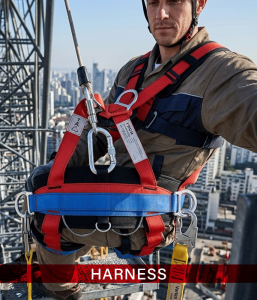
A safety harness is personal protective equipment used during work at height. It is worn around the shoulders, torso, pelvis and upper legs. A harness does not work alone. It forms one part of a complete fall protection system. The system may include:
  • A suitable anchorage point
  • A correctly fitted harness
  • A compatible connecting device
  • A planned rescue procedure
  • Proper training and supervision
Workers should receive training before using fall protection equipment. They must understand how to fit, connect, inspect and remove the equipment safely.

Why Choose a Full Body Harness?

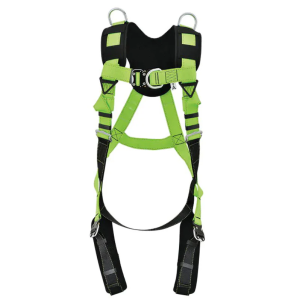
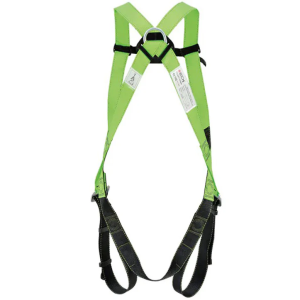
A full body harness spreads fall-arrest forces across stronger areas of the body. These include the shoulders, thighs, pelvis and chest. Many people use the term safety harness belt when searching online. However, a waist belt alone should not be selected for fall arrest. A full body design provides the body support needed during a stopped fall. A correctly chosen harness can help:
  • Support the worker after a fall
  • Keep the body in a more stable position
  • Distribute arrest forces across the body
  • Provide secure connection points
  • Improve movement during elevated work
  • Support rescue or positioning tasks
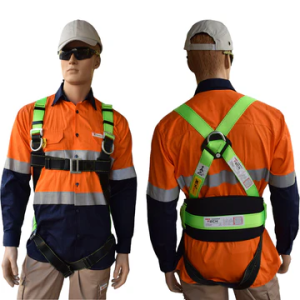
The harness must fit correctly. Loose straps can increase movement during a fall. Straps that are too tight can restrict movement and cause discomfort.

Full Body Safety Harness Options

Different jobs require different harness designs. Consider the work area, fall risk, access method and required connection points.
  • General Fall-Arrest Harnesses
  • Work-Positioning Harnesses
  • Confined-Space Harnesses
  • Multi-Point Harnesses

Fall Restraint and Fall Arrest

Fall restraint and fall arrest are not the same. A fall-restraint system prevents the worker from reaching an unprotected edge. It is designed to stop a fall from happening. A fall-arrest system stops the worker after a fall begins. It requires enough clear space below the worker. It must also control arrest forces and prevent contact with a lower surface. Where a harness system is necessary a competent person should assess:
  • The working height
  • The position of the anchor
  • The possible free-fall distance
  • The length of the connecting device
  • The deployment distance of the energy absorber
  • The worker’s height
  • The clearance below
  • Nearby structures and hazards
  • The available rescue method

How to Choose the Right Harness

The best harness is not simply the most expensive model. It must suit the worker and the planned task.
  • Check the Intended Application
  • Select the Correct Attachment Points
  • Confirm the Size and Fit
  • Review the Weight Capacity
  • Consider the Working Environment
  • Check Equipment Compatibility

Harness Comfort and Adjustability

Workers may wear a harness for several hours. Comfort can support better fitting and more consistent use. Useful comfort features may include:
  • Padded shoulder straps
  • Breathable back support
  • Adjustable chest straps
  • Adjustable leg straps
  • Quick-connect buckles
  • Clearly marked adjustment points
  • Lightweight webbing
  • Tool-carrying attachments
  • Fall indicators
  • Label covers

Inspecting a Safety Harness

Inspect the harness before every use. OSHA requires personal fall-arrest systems to be checked for wear, damage, and deterioration. Defective components must be removed from service.  Check the complete harness carefully. Look for:
  • Cuts or torn webbing
  • Frayed fibres
  • Burns or melted areas
  • Chemical damage
  • Heavy staining
  • Loose stitching
  • Broken buckles
  • Bent D-rings
  • Cracks or corrosion
  • Missing labels
  • Damaged connectors
  • Deployed fall indicators
  • Unauthorized repairs
Remove the harness from service when damage is found. Do not repair webbing with tape, glue, stitching or replacement parts unless the manufacturer authorizes the repair. A harness involved in a fall should be withdrawn immediately. It should only return to use when permitted by the manufacturer and approved through the required inspection process.

Cleaning and Storing Your Harness

Correct care can protect the webbing and hardware. Follow the manufacturer’s cleaning instructions.
  •  Mild soap and water may be suitable for many products. Strong chemicals can weaken fibers or damage coatings.
  • Let the harness dry naturally. Avoid contact with direct heat, flame and strong sunlight.
  • Store the unit in a clean and dry environment.
  •  Do not stack heavy tools on top of it. 
  • Avoid oils, chemicals, sharp objects, moisture and welding sparks.
  • Do not write on webbing unless the manufacturer allows it. Some inks and solvents can damage the material.
  • Maintain inspection records where required. Record the product details, inspection date, condition and action taken.

Training and Rescue Planning

Supplying a harness is only one part of worker protection. Users need practical training. They should know how to:
  • Inspect the equipment
  • Put on the harness
  • Adjust each strap
  • Identify attachment points
  • Connect the lanyard
  • Avoid unsafe connections
  • Calculate required clearance
  • Respond after a fall
  • Store the equipment correctly

Why Buy Harnesses from Protective Wear?

Protective Wears helps businesses source practical safety equipment for demanding workplaces. Our harness range is selected for professional work-at-height needs. You can compare designs, attachment points, adjustment systems and comfort features before ordering. We support customers across industries such as:
  • Construction
  • Engineering
  • Utilities
  • Maintenance
  • Warehousing
  • Manufacturing
  • Telecommunications
  • Energy
  • Facility management
  • Industrial services
Product information helps you compare available options. Your final selection should still follow the site risk assessment, local safety rules and equipment manufacturer’s instructions.

Order Your Harness from Protective Wear

Protect your team with equipment suited to the job. Browse our range of safety harnesses and compare the available sizes, fittings and connection points across Saudi Arabia, Qatar, Kuwait, Bahrain, Jordan, Egypt, Iran and Iraq. Choose a design that supports safe movement and reliable use at height. For larger teams, review each worker’s size and job role before ordering. This helps provide a better fit and avoids relying on one harness type for every task. Shop harnesses from Protective Wear and build a safer work at height system for your workplace.

Safety Harness FAQs

What is a safety harness used for?

A safety harness connects a worker to a fall-restraint, fall-arrest, positioning or rescue system. Its exact use depends on the harness design and attachment points.

Is a full body harness better than a safety harness belt?

For fall arrest a full body design is the correct choice. A waist-only safety harness belt does not provide the same level of body support during an arrested fall.

How should a harness fit?

The harness should fit close to the body. Straps should remain flat and secure. It should not restrict normal movement or create large gaps.

Can one harness fit every worker?

Not always. Workers have different body shapes and measurements. Employers should provide suitable sizes and confirm the fit for each user.

How often should a harness be inspected?

The user should inspect it before every use. Formal inspections may also be required at set intervals under local rules, workplace procedures or manufacturer instructions.

Can a harness be used again after stopping a fall?

A harness involved in a fall should be removed from service immediately. Follow the manufacturer’s instructions and workplace inspection procedure before deciding what happens next.

Does a harness prevent every fall?

No. A harness is only one part of a larger safety system. Safe access, suitable anchorages, correct connections, training, clearance calculations, supervision and rescue planning are also required.

Can different harness and lanyard brands be used together?

Only use components that are confirmed as compatible. Check the instructions and system requirements before combining equipment from different manufacturers.