
Workplace safety begins at the ground level. No matter if you are on a construction site or in a warehouse or manufacturing plant, the right safety shoes will protect you from the usual hazards. Whether it is falling objects, slippery surfaces or sharp debris, the right pair of shoes will significantly cut down the odds of getting injured.
Yet not all safety shoes guarantee the same quality of protection. In this regard, the EN ISO 20345 standard becomes relevant. This is a set of internationally recognized requirements aimed at making sure that safety shoes are high-performing and safe enough. Knowledge of these standards will facilitate choosing appropriate footwear for you.
In the following manual, we will discuss what EN ISO 20345 actually is, how safety rating works, and what to consider while purchasing safe shoes.
What Is EN ISO 20345?
The EN ISO 20345 standard is the international standard for occupational protective footwear. This standard defines the basic requirements that footwear should comply with in order to be classified as certified safety footwear.
This standard is applied by many organizations all around the world because it ensures the provision of protection to workers from typical risks in the working environment. Each pair of certified safety shoes goes through intensive testing of its resistance to impacts, compression, the quality of the sole, etc., before becoming available on the market.
As opposed to ordinary work boots, footwear certified by EN ISO 20345 has a protective toe cap that is able to withstand an impact of 200 joules and a 15 kN compressive force. Such elements provide essential protection for people whose feet are under threat of falling heavy tools or equipment.
Who Should Wear EN ISO 20345 Certified Safety Shoes?
Certified footwear is recommended for professionals working in industries where foot injuries are a common risk, including:
- Construction
- Manufacturing
- Warehousing and logistics
- Oil and gas
- Mining
- Engineering
- Transportation
- Maintenance and utilities
For these workplaces, investing in certified industrial safety shoes is not only a smart decision but often a regulatory requirement that supports employee safety and compliance.
Understanding the Basic Requirements of EN ISO 20345
The EN ISO 20345 standards define specific performance requirements that all certified pairs of safety shoes must meet. The test ensures that the safety footwear is reliable and at the same time comfortable to wear on an everyday basis. Knowledge of these minimum requirements will be helpful in choosing appropriate footwear for your work environment.
Toe Protection
The most distinguishing feature of the EN ISO 20345-compliant shoes is that they have toe protectors. All EN ISO 20345-compliant shoes can resist impacts up to 200 joules and pressures of 15 kN, hence reducing any risk of injury from falling objects or equipment and compacted materials.
There are various materials that can be used for protective toe caps, such as steel, composite, and aluminum. All the materials provide superb protection, but one should be chosen according to the environment.
Slip Resistance
Slips, trips and falls are the main causes of accidents at work. This is one reason why EN ISO 20345 requires strict slip-resistance testing to ensure the footwear gives enough traction.
Certified safety shoes are tested for slip resistance on different surfaces such as ceramic tiles and steel flooring. Shoes that meet these tests offer more stability for the worker where water or some other liquid may make the surface slippery.
Sole Durability
The outsole of safety footwear serves as an important element in ensuring protection against wear and harmful surfaces encountered by the worker. As per EN ISO 20345, it is mandatory for shoes to have a durability property that will increase their longevity while maintaining their safety characteristics.
An excellent sole must possess the following properties:
- High abrasion resistance
- Grip on various types of floors
- Resistant to oil and fuel
- Long-lasting performance under heavy-duty
Comfort and Ergonomics
Protection must not be achieved at the expense of comfort. In most cases, workers have to stand for many hours, which makes comfort one of the essential considerations for safety shoes.
Today, the best lightweight safety shoes are made to minimize fatigue and ensure maximum comfort. Many of these shoes have breathable material, padded insoles, shock absorption, and flexible outsoles.
Wearing shoes that fit well and enable easy foot movement increases worker productivity by reducing strain and increasing the likelihood of wearing the protective shoes.
Work safety shoes offered by Protective Wears are chosen based on established safety standards and the comfort required in challenging working conditions.
EN ISO 20345 Safety Ratings Explained
However, not all work environments will pose the same threats, and that is the reason for having several safety classifications in the EN ISO 20345 standards. All these different ratings have their own set of protection elements, so employers and employees can purchase appropriate footwear for their work environment.
By knowing the different ratings, it becomes easier to purchase footwear with the necessary protection elements.
| Safety Rating | Protection Provided | Best For |
| SB | Basic toe protection (200 J impact resistance) | Light industrial work and general workplaces |
| S1 | SB features, antistatic properties, energy-absorbing heel, fuel- and oil-resistant sole | Indoor workplaces, warehouses and manufacturing |
| S1P | S1 features + penetration-resistant midsole | Warehouses, workshops and construction sites with sharp objects |
| S2 | S1 features + water-resistant upper | Food processing, laboratories and outdoor work in wet conditions |
| S3 | S2 features + penetration-resistant midsole + cleated outsole | Construction, oil and gas, heavy industry, mining |
| S4 | Waterproof polymer footwear with SB features | Agriculture, chemical plants and the food industry |
| S5 | S4 features + penetration-resistant midsole + cleated outsole | Heavy industrial environments, mining and waste management |
Additional Safety Markings You Should Know
In addition to the standard EN ISO 20345 marking on the certified safety shoe, there may be some other symbols on the shoes, indicating certain protections from hazards encountered at work. This will allow you to pick out the appropriate footwear to wear while at work.
These symbols will help you to make an informed choice.
| Marking | Meaning | Benefit |
| HRO | Heat-resistant outsole | Protects against contact with hot surfaces up to 300°C |
| FO | Fuel- and oil-resistant outsole | Prevents sole damage from oils and petroleum products |
| WR | Water-resistant footwear | Keeps feet dry in wet working conditions |
| CI | Cold insulation | Reduces heat loss in cold environments |
| HI | Heat insulation | Protects feet from high external temperatures |
| SRC | Highest slip-resistance rating | Improves grip on ceramic and steel surfaces |
| ESD | Electrostatic discharge protection | Safely dissipates static electricity |
| P | Penetration-resistant midsole | Protects against nails and sharp objects |
| AN | Ankle protection | Provides additional support against ankle injuries |
| CR | Cut-resistant upper | Offers extra protection against cuts and sharp materials |
Steel-Toe vs. Composite-Toe Safety Shoes
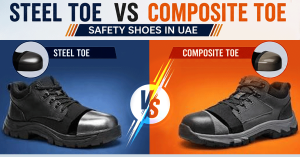
One of the most common questions when buying safety shoes is whether to choose steel-toe or composite-toe protection. Both options comply with EN ISO 20345 standards when certified, but each offers unique advantages depending on the work environment.
The right choice depends on factors such as workplace hazards, comfort requirements, temperature conditions, and the type of work performed.
| Feature | Steel-Toe Safety Shoes | Composite-Toe Safety Shoes |
| Protection | Excellent impact and compression resistance | Excellent impact and compression resistance |
| Weight | Heavier | Lighter |
| Material | Steel | Non-metallic materials such as fiberglass, carbon fiber, or Kevlar |
| Temperature | Conducts heat and cold | Better thermal insulation |
| Metal Detectors | May trigger security scanners | Does not trigger metal detectors |
| Comfort | Suitable for demanding industrial work | More comfortable for extended wear |
| Best For | Construction, manufacturing, mining and heavy industry | Electrical work, airports, logistics, warehouses, and outdoor jobs |
Which Option Is Right for You?
A different kind of safety shoe will work for a specific workplace. The best way out will depend on the hazards at hand.
Steel-toe safety shoes should be worn in case there are machines involved, falling objects or environments where the shoes need to be extra tough.
In the case of composite-toe safety shoes one needs to consider comfort, regular passing through the security checks or working in environments where there are risks of electrical hazards or extreme temperatures.
While choosing work safety shoes, one must not overlook the workplace risk assessment but must think of what to wear based on comfort and cost.
Here at Protective Wears, you will get a wide range of safety shoes. Our industrial safety shoes will not only meet international safety standards but also provide you with comfort and protection.
Why Buying Certified Safety Shoes Matters
Regardless of the industry you are in, the use of certified safety shoes should be your main concern. The certified safety shoes in the UAE ensure quality protection that is internationally approved. The employers will definitely be satisfied that their employees have quality protective wears.
Protective Wears provides a wide range of certified safety footwear for construction, manufacturing, logistics, oil and gas industries, and many others. The products provided have been specially selected to meet the quality standards.
Common Mistakes When Buying Safety Shoes
Choosing the right safety shoes is just as important as wearing them. Many workplace injuries occur because workers wear footwear that does not match the hazards of their job or has lost its protective performance over time. Avoiding a few common mistakes can help improve safety, comfort, and long-term value.
- Buying Based on Price Alone
- Ignoring EN ISO 20345 Certification
- Choosing the Wrong Safety Rating
- Wearing the Wrong Size
- Overlooking Comfort
- Continuing to Wear Damaged Footwear
Final Thoughts
By understanding the standards of EN ISO 20345, you can select the proper safety shoes that will provide sufficient safety at the workplace. From choosing the proper safety rating to knowing extra symbols like SRC, HRO, and ESD, each thing is necessary to make the workplace safe.
Regardless of whether you are looking for steel-toe safety shoes, composite-toe safety shoes, or slip-resistant safety shoes, it is imperative that you select certified safety shoes. Apart from offering safety to workers, quality safety shoes are important in improving the comfort and productivity of workers.
If you are located in the UAE and want to buy certified safety shoes, you should get in touch with Protective Wears. It has been helping various business organizations to create safe workplaces by supplying certified safety footwear to them.
Safety Shoe FAQs
What is EN ISO 20345?
EN ISO 20345 is an international safety shoe standard for the workplace. It provides safety specifications such as a toe protector that can resist a 200 joule impact and 15 kN of compression.
What is the difference between SB, S1, S2, and S3 safety shoes?
Each rating has some level of protection:
- SB: Toe safety.
- S1: Toe protection plus antistatic, energy-absorbing, and oil-resistant soles.
- S2: Same rating as S1 but with water-resistant uppers.
- S3: S2 rating in addition to puncture-resistant midsoles and cleats on the outsoles.
Are steel-toe safety shoes better than composite-toe safety shoes?
They both are EN ISO 20345 certified and provide excellent safety. Steel-toe safety shoes are highly durable and can withstand heavy industries while composite-toe safety shoes are lightweight and non-metallic.
How often should safety shoes be replaced?
It will depend on the kind of working environment and how frequently the safety shoes are used. You need to replace your safety shoes when there is wear in their soles, damaged toe caps, cracked or torn uppers or a lack of comfort and support provided by them.
Why are slip-resistant safety shoes important?
The safety shoes have slip-resistant soles which help prevent slips and accidents by providing stability on slippery or smooth surfaces. If you are working in a construction site, warehouse, manufacturing unit, food processing unit or health care center, then you need shoes that will not make you slip.
Where can I buy certified safety shoes in the UAE?
You should consider investing in safety shoes approved in the United Arab Emirates by PPE providers such as Protective Wears for effective workplace protection. Safety shoes that are certified to EN ISO 20345 fulfill the safety requirements worldwide.