Looking for fall protection in Saudi Arabia for workers at height? A suitable fall protection system can help control risks during construction, maintenance, industrial and elevated work.
Looking for fall protection in Saudi Arabia for workers at height? A suitable fall protection system can help control risks during construction, maintenance, industrial and elevated work. Protective Wears provides fall protection equipment for different work-at-height applications. It will consist of items such as harnesses, lanyards, energy absorbers and lifelines among others. It takes more than choosing a harness or lanyard to select the proper equipment. The complete system should match the work activity, anchorage, worker, fall hazard and required level of protection.
PPE Categories
Safety Equipment Available in Riyadh
Certified PPE for every hazard — delivered fast to Riyadh.
What makes thousands of Riyadh businesses choose Protective Wears.
🏅
Certified Only
Every product carries CE, EN, or ANSI certification. We never stock uncertified equipment.
🚀
Fast Local Delivery
Orders placed before 2 PM dispatched same day. Delivery across Riyadh within hours.
💰
Competitive B2B Pricing
Tiered pricing for bulk orders. Framework agreements and 30-day credit terms for registered businesses.
🔬
Expert Guidance
Our safety specialists help you select the right PPE for your specific industry and risk assessment.
📜
Compliance Support
We provide test certificates, conformity declarations and help you stay audit-ready.
♻️
One-Stop Supply
5,000+ products across all PPE categories — one supplier, one invoice, one relationship.
Buy Fall Protection Equipment in Saudi Arabia
Fall protection is used when workers may be exposed to a fall from an elevated position. A complete system can include several components. These may include a full-body harness, connecting device, anchorage, and energy-absorbing or fall-arrest equipment. The correct combination depends on the task. Therefore, businesses should assess the work area before purchasing equipment. We offer fall protection products for professional and industrial applications. Buyers can review individual product specifications and select equipment according to their workplace requirements.
Types of Fall Protection Equipment
Different work-at-height hazards require different equipment. The main components include:
Safety Harnesses
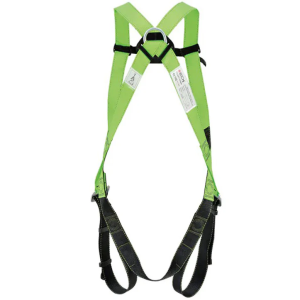
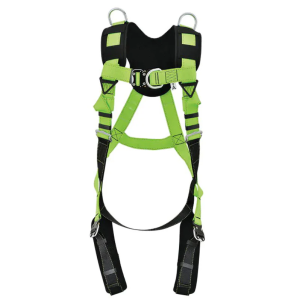
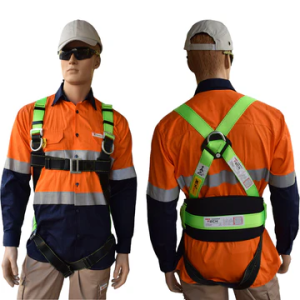
A safety harness helps connect the worker to a compatible fall protection system. Full-body harnesses are designed for fall arrest applications when used as part of a suitable system. Our company offers different harness configurations. These include lightweight models, comfort-focused designs, and harnesses with integrated belts.
Full-Body Harness
A full-body safety harness distributes fall arrest forces across appropriate areas of the body. Full-body harnesses can be used with compatible lanyards, lifelines, and other components. However, the attachment points must match the intended application.
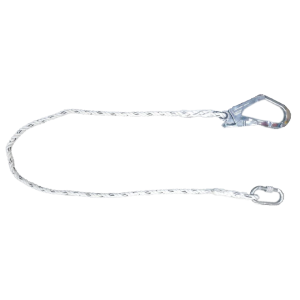
Safety Lanyards
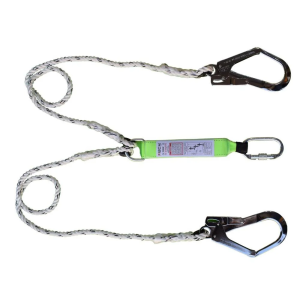
A safety lanyard connects compatible fall protection components. Options can include single-leg and twin-leg designs. Energy-absorbing lanyards are also available for suitable fall arrest applications.
Fall Arrest Lanyards
A fall arrest lanyard is designed for use in a fall arrest system. The system must provide enough clearance below the worker. Lanyard length, energy absorber deployment, anchorage location, and worker position can affect this distance.
Energy Absorbers
Energy absorbers are designed to limit the forces generated during a fall arrest. They must be selected according to the manufacturer's specifications. Never assume that an energy absorber is compatible with every harness or lanyard.
Lifelines and Fall Arresters
Lifelines can provide connection and movement options for suitable work-at-height applications. Retractable fall arresters can also be used in compatible systems. The correct equipment depends on the work environment and anchorage arrangement.
Connectors and Anchorage Equipment
Connectors link components within a fall protection system. Anchorage equipment provides a connection point for the system. Both components must be suitable for the intended application.
Fall Protection for Different Saudi Industries
Work-at-height risks vary between industries. Therefore, equipment selection should start with the actual work activity.
The examples above are general applications. The required fall protection system depends on the site's specific hazards.
Fall Protection for Construction Work
Construction sites can change quickly. Workers may move between platforms, structures, scaffolding, and other elevated areas. Edges, openings, temporary structures, and changing anchor locations can create additional risks. Therefore, fall protection planning should consider the work sequence. Equipment should also remain compatible as workers move between different work areas.
Fall Protection for Industrial Work
Industrial facilities can involve elevated platforms, machinery, tanks, roofs, and maintenance areas. Workers may also encounter heat, chemicals, sharp edges, abrasion, or restricted working spaces. These conditions can affect equipment selection. Check the manufacturer's specifications before using fall protection equipment in challenging environments.
How to Choose Fall Protection Equipment
The right equipment starts with a proper assessment.
Identify the fall hazard
Decide the required protection method
Select the harness
Select the connecting device
Check the anchorage
Calculate fall clearance
Consider the work environment
Fall Protection vs Fall Restraint
Fall protection is a broad term. It can include different methods for controlling fall hazards. Fall restraint limits a worker's movement. It can prevent the worker from reaching an exposed fall hazard. Fall arrest is designed to stop a fall after it begins. The two systems should not be treated as the same. Select equipment according to the actual work activity and risk assessment.
Safety Harness Belt and Work Positioning
A safety harness belt may refer to a belt integrated into a harness or a work-positioning belt. However, a body belt should not automatically be treated as fall arrest equipment. The application and manufacturer's specifications determine its proper use. Saudi's referenced PPE standards include EN 358 for work-positioning belts and work-positioning lanyards. EN 361 covers full-body harnesses for fall protection.
Fall Protection Standards in Saudi Arabia
Saudi Arabia's Technical Regulation for Personal Protective Equipment and Clothing provides requirements for relevant PPE. SASO also lists standards related to personal protection against falls from height.
Relevant standards include:
Standard
Equipment or application
EN 354
Lanyards
EN 355
Energy absorbers
EN 358
Work positioning and restraint
EN 360
Retractable fall arresters
EN 361
Full-body harnesses
EN 362
Connectors
EN 363
Personal fall protection systems
EN 365
Instructions, maintenance, and periodic examination
These standards apply to specific equipment types. Therefore, buyers should verify the standard applicable to the exact product. Do not assume that every fall protection product carries every standard listed above.
Employer Responsibilities for Workplace Safety
Saudi labour provisions place occupational safety responsibilities on employers. Article 122 states that employers must take necessary precautions to protect workers from work-related hazards. Article 123 requires employers to inform workers about occupational hazards and obligate them to use prescribed protective equipment. For businesses, this makes proper PPE selection only one part of a wider safety process. Training, hazard assessment, equipment inspection, and safe work procedures also matter.
Inspect Fall Protection Equipment Before Use
Fall protection equipment requires regular inspection. Before use, check for visible damage and signs of deterioration.
Look for:
Cuts and frayed webbing
Damaged stitching
Burns or heat damage
Chemical contamination
Corrosion
Cracked connectors
Damaged locking mechanisms
Deformed metal components
Missing labels
Signs of impact or previous fall arrest
Remove damaged equipment from service. Follow the manufacturer's instructions for inspection and periodic examination. EN 365 specifically addresses requirements related to instructions, maintenance, periodic examination, repair, marking, and packaging.
Fall Protection in Riyadh, Jeddah, and Across Saudi Arabia
Construction and industrial projects across Saudi Arabia can involve different work-at-height requirements. Businesses in Riyadh, Jeddah, Dammam, Khobar, Jubail, and other industrial areas may need equipment for construction, maintenance, engineering, facilities, and industrial work. However, location alone should not determine product selection. The work activity and site conditions should guide the equipment choice.
Bulk Fall Protection Equipment for Saudi Businesses
Large projects may require fall protection equipment for multiple workers. However, buying one configuration for every task may not be suitable. Different work areas can require different harnesses, lanyards, lifelines, or anchorage solutions.
For bulk procurement, provide:
Required equipment type
Quantity
Worker requirements
Intended application
Required configuration
Relevant technical specifications
Delivery requirements
Review product documentation before placing a large order. This helps procurement teams match equipment to the actual project requirements.
Why Choose Protective Wears for Fall Protection?
Protective Wears has a dedicated fall protection category covering multiple equipment types. Its current range includes harnesses, lanyards, and related fall protection products. The category approach also allows buyers to review individual products instead of treating all fall protection equipment as interchangeable. For professional procurement, check each product's technical specifications, intended application, and available documentation before ordering.
Get Fall Protection Equipment in Saudi Arabia
Need fall protection in Saudi Arabia for your workers or project? Explore safety harnesses, full body harnesses, safety lanyards, fall arrest lanyards, energy absorbers, lifelines and related equipment from Protective Wears. For bulk requirements, share your application, equipment type, quantity and technical requirements when requesting a quotation. Choose each component according to the actual workplace hazard and the manufacturers specifications.
FAQ
Questions About PPE in Riyadh
Everything you need to know before placing your order.
Fall protection refers to equipment and methods used to control the risk of falls from elevated work areas.
A full body harness is a specific type of harness designed for suitable fall protection applications. The exact configuration depends on its intended use.
A safety harness lanyard is a connecting device used with a compatible harness and suitable anchorage or fall protection component.
Fall arrest lanyards are to be used in a fall arrest system. It needs to be selected based on the requirements of the system and the manufacturer’s instructions.
No. Compatibility is important. The manufacturer’s instructions, attachment points and application have to be considered.
No. A belt used for work positioning or restraint should not automatically be considered fall arrest equipment.
Inspect equipment before use and follow the manufacturers requirements for periodic examination. Remove damaged equipment from service.
Not necessarily. The correct system depends on the work activity, fall hazard, anchorage, clearance and environmental conditions.
Get In Touch
Contact Us in Riyadh
Speak with our local team for quotes, bulk orders and compliance support.